
There cannot be shortage of a good if entrepreneurs figure out how to maximize its use.
There cannot be redistribution of a good, only an expansion of it, using entrepreneurial creative processes of the mind, heart and a commitment to fulfilling humans’ needs. Redistribution only creates poverty whereas entrepreneurship creates wealth for everyone.
To put this in perspective, back in the mid-19th century oil merchants and business owners decided to use the 42-gallon barrel to market crude oil, still in use this day. Out of the 42 gallons, only 11 were produced as gasoline, which was a useless byproduct of the refinery process. The rest was kerosene for lamps, lubricants for wagon wheels, and waxes for candles. At the time, kerosene was the money-making scheme of extracting oil from the ground.
When the combustion engine was invented in the late 1890’s and used to produce cars, the demand of gasoline increased. This grew exponentially with the mass marketing of the Ford Model T automobile, adding to the new exploration of oil fields and vast improvements in extraction, production and refinement techniques. These entrepreneurial achievements resulted from the creative mind of people trying to fulfill humans’ desires and demands for new products and services.
Nowadays, petroleum is still measured at the 42-gallon barrel which currently produces 20 gallons of gasoline, almost double from 70 years ago. The rest is used for jet fuel (we can now fly anywhere in the world), plastics (e.g., the very computer I’m typing this article with), ink, nylon (for the clothes we wear), roof shingles, cosmetics, candles, asphalt and lubricants (for the cars we drive), and many other byproducts. The same 48 gallons have created a wealth of products that have improved our standard of living, not to say that each gallon’s quality is better than ever before.
Entrepreneurs, scientists and the needs and wants of millions of people made possible to produce more wealth than ever with the same amount of such good, as it is oil. I cannot begin to imagine what could have been produced and could be developed in the future, had we not had oil wars and attempts to control people with this “black” gold.
Evidently, even with the current problems, oil has been beneficial for humans overall. As an example, after all these years, kerosene went from the most used by-product of crude to being hardly produced at all, giving way to gasoline, a cleaner and more efficient use of oil. We shifted our attention to other uses. If climate change is a concern, maybe entrepreneurs and scientists, and people in general, can change of the use of oil, say, from burning gasoline and other fuels to other more valuable goods.
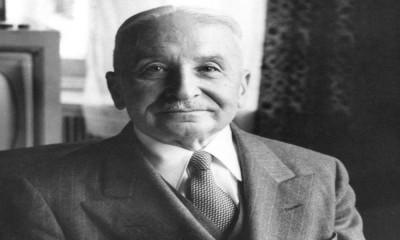
This can all be determined in the market place, which is best defined as humans acting, interacting, exchanging, and deciding what is best for them as individuals and a group, rather than imposing their will through government regulations and intervention. To illustrate this, Economist Ludwig von Mises, in his “Critique of Interventionism, 1929”, wrote:
“We constantly observe that entrepreneurs are succeeding in supplying the markets with more and better products and services despite all difficulties put in their way by law and administration. But we cannot calculate how much better those products and services would be today, without expenditure of additional labor, if the hustle and bustle of government were not aiming (inadvertently, to be sure) at making things worse.”
This can also be applied to other sources of energy, such as solar, nuclear, etc. Many people are trying to impose the use of such sources, with specific technologies, but at what cost? Most likely taking away resources from entrepreneurs and researchers which could help find superior use of those sources. The same happened with oil, in which intervention caused the adoption of the crude as our main source of energy, hampering the growth of “clean” energy sources.
Granted, these alternatives may be better and more efficient than oil, but let’s not forget that oil can still be our friend, not our enemy, and allow people to decide what’s best for them, without coercion or political power. Freedom of choice is the key to continuous progress.







Pingback: Petroleum Asphalt | Purathrive()