

 Leftists today find themselves in a terrible contradiction. On one hand, they hold to the rigged principle that society needs governing by a domineering state. The commoners are not to be trusted so it takes badges and guns to maintain order. On the other hand, the same public that cannot function without government imposition is also entrusted with the “right†to vote for state representation. Democracy, normally seen the high water mark of Western achievement, is anchored by this discrepancy in logic.
Writers and thinkers on both major sides of the political spectrum still celebrate the idea of mass suffrage. Their reasoning follows: government may be imperfect but at least every adult man and woman is entitled to make their voice heard at the ballot box. Debates over public policy occur and are often spirited. But in the end, the institution of democracy goes unquestioned.
The worst practitioners of this wily craft are the conservative intellectual crowd. In the nation’s largest publications, they uphold the mantle of Leviathan taming. But for all their criticism heaped upon the progressive agenda, conservatives, and even some libertarians, will not touch on if representative democracy has truly delivered the human race from serfdom. Government stays a nuisance yet never one that should be swatted away completely look a bothersome fly.
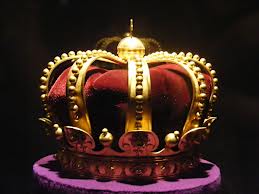
The spokesmen of political ideologies praise government “of the people†because it is seen as progress from the monarchies of old. In the time of kings, the public was regarded as property of the crown. The idea that men could be treated as subjects rather than beings of free will continues to be a subject of inspiration in newspaper columns and polemics. Natural rights, the American Revolution, and government legitimacy by voting booth are all major themes of contemporary political thought. Representative government gives men their liberty, or so it’s asserted from the spokesmen of common opinion.
Yet for all its listed accolades, democracy in action differs little from a king’s rule. The state has its hands in everything from financial transactions to individual transportation. A business cannot be started until granted permission from government overseers. Food is not allowed to be brought to the mass market unless first approved. The eminent domain authority makes land owned just in title - it can be seized at any time by state agents. The income tax by itself is a message to wealth creators that before they can earn, they must pay fealty.
Currently in Europe, an unelected cabal of technocrats now issues edicts for every miniscule function of the economy. This gang of “Brussels scum,†to borrow Taki Theodoracopulos’s phrase, remains insulated from any kind of accountability while directing the lives of the Eurozone citizenry. The “Land of the Free†is not handling much better. In the United States, the monstrously bloated federal bureaucracy is churning out rules and mandates at a rate light-years above what the criminal class in Congress is capable of. Democracy may still be a popular institution but it no longer fully exists in practice. The people vote for politicians who give power right back to an entrenched guild of societal engineers
In his controversial work Democracy: The God That Failed, economist and philosopher Hans-Hermann Hoppe details why monarchy is superior to representative, term-limited government. There is little dispute that private ownership of resources makes for more rationalized use over time. In applying this principle to the governing sphere, democracy loses the gloss of superiority it has to monarchy. As Hoppe writes,
…a private government owner will want to avoid exploiting his subjects so heavily, for instance, as to reduce his future earnings potential to such an extent that the present value of his estate actually falls. Instead, in order to preserve or possibly even enhance the value of his personal property, he will systematically restrain himself in his exploitation policies. For the lower the degree of exploitation, the more productive the subject population will be; and the more productive the population, the higher will be the value of the ruler’s parasitic monopoly of expropriation.
Political office under democracy is a feast for the childish ambitions of both the elector and electee. Voters put their faith in a man who promises the moon and then some. Once in office, a pol will find it most beneficial to milk the newly-acquired authority for all that it bears. The crown can be passed down to heirs, thus incentivizing the king to maintain the capital value of his kingdom. There is no such guarantee in democracy. It pays more to take the money, access, and enshrined privilege as soon as feasible. Being the great machine of consumption, governments will gorge on themselves till the pool of wealth in society has been drained and the productive-minded leave.
And there is always plenty of violence along the way. Before the advent of the state, wars were fought not between whole nations but by kings who employed armies to fight against battalions of rival kingdoms. The mass slaughter of civilians was not yet common. This was due to both weaponry deficiency and the still-to-be-born idea that residing in national borders automatically makes one an enemy of a warring state. As Murray Rothbard points out, war in the Middle Ages “was something of a sporting match†that civilians would enjoy from the safety of being off the battlefield. The state corrupted this idea and with it, brought upon the spilling of needless blood. War continues to be an exercise in hegemony for the world’s superpower governments. Instead of a king sacrificing their fruitful citizenry, politicians and state generals stay ready to send taxpayers overseas to protect vital “interests.†If democracy is humane in the manner wars are fought, then so are rabid dog fights.
When kings still reigned there existed a clear and distinct social hierarchy. One was either ruled over or did the lording as part of a noble aristocracy. The same distinction exists within the nation state, though it’s still boggled in deceptive euphemisms so as to not alert the mass mind to their servitude. Monopoly government, no matter who is in power, will always operate off the backs of the taxed and regulated. It is a parasite of the highest order which forces men into the same serfdom they lived under during the age of monarchies.
If the choice is between monarchy and democracy, I say give me a king. I have enough respect for myself to wish to live under the truth rather than fiction. Representative democracy is, as Alberty Jay Nock once wrote, the same as thing as  “Communism, the New Deal, Fascism, Nazism…merely so-many trade-names for collectivist Statism.†It is far better to live life being told you are a subject than to be one and mistakenly believe the state is your representative.




Facebook
YouTube
RSS