
Blog

Democracy and Monarchy

Democracy and Monarchy
Profile photo of Caleb McMillan

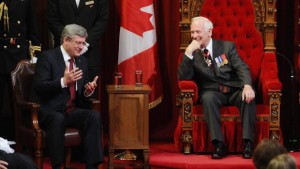
throne-speech-20110603-topixRegarding the country as their own private property, the monarchist-aristocratic class will wish to preserve the capital-value and thus will promote the mechanisms that allow for wealth accumulation.

Democratic interests, on the other hand, are by nature populist and short-term thinking. The masses have never been rational, nor has the monarchist-aristocratic class ever been truly responsible to all private-property owners.

This is what makes the Canadian system – theoretically — superior to the American Republic. The Canadian system preserves this monarchical element to ensure democratic interests don’t undermine the long-term interests of the country.

Neither Canada nor the United States are strictly democracies, but rather, constitutional governments bound by certain democratic elements, more so in the American system. Both systems fail to live up to their theories, because, as Professor Hoppe has keenly demonstrated, the theory of democracy is fundamentally flawed.

Yet while ratifying the constitution in the provincial legislatures, George-Étienne Cartier commented on the lessons that should be learned from the American experience of an overbearing democracy:

“We were not now discussing the great problem presented to our consideration in order to propagate democratic principles. Our attempt was for the purpose of forming a federation with a view of perpetuating the monarchical element. The distinction therefore between ourselves and our neighbours was just this: in our federation the monarchical principle would form the leading feature, while on the other side of the lines, judging by the past history and present condition of the country, the ruling power was the will of the mob, the rule of the populace.”

“They [the Americans] had founded a federation for the purpose of carrying out and perpetuating democracy on this continent; but we, who had the benefit of being able to contemplate republicanism in action during a period of eighty years, saw its effects, and felt convinced that purely democratic institutions could not be conducive to the peace and prosperity of nations.”

Indeed, it’s never a bad time for Canadians to restore their distrust in democracy.

  • Sandro Frei

    I guess we have to choose between the tyranny of the masses or the tyranny of some sort of elite then. I am lucky in that I am a citizen the only true democracy in the world at the time of writing, Switzerland. I am also a citizen of Canada. Having had primary and secondary schooling in both, I can say that my education in Switzerland focused much more heavily on civics than my education in Canada. My Swiss education also explored much more intensely the notion of individual freedom and how ones own freedom relates to the freedom of others. Education is critical for a truly democratic populace, but to believe that it is somehow exceptional is grossly misguided. To support my point take the example of Canada, where representatives are elected and unaccountable to the citizens who elect them until the subsequent election. The notion that elites are somehow more capable of governing a nation than the citizens themselves would imply that upon being elected the representatives must somehow be endowed with some kind of magical power, because, after all, the representatives are a subset of the citizenry. So if the citizenry do not possess the skills to lead, it follows that the representatives do not either!

  • Frank Zeleniuk

    **….in our federation the monarchical principle would form the leading feature, while on the other side of the lines, judging by the past history and present condition of the country, the ruling power was the will of the mob, the rule of the populace.”**

    Easy to see that Cartier was an Elitist and didn’t have too much faith in the “mob”. Heavens! Couldn’t leave the ruling power to the will of the mob.

    I have read Hoppe’s “Democracy: The God that Failed”, which is what I believe this article is based upon. It made a lot of sense regarding Democracy not being the best form of government.

    There are two points I feel are relevant to a functioning democracy that I feel are necessary to mention.

    The first is that US was a republic and I don’t believe it was ever intended to be a universal democracy. Initially certain segments of the population did not have the vote federally, such as Women.

    A possible solution to the problem of a democratic form of government is an avenue to procuring a right to vote.

    It should also under certain circumstances be able to be revoked, e.g. when someone has been criminally convicted.

    The tragedy of the States is in the eventual degradation of the educational system and a dumbing down of the populace, or as Cartier called them - the mob.

    Our own education system, in Canada has followed a similar route. What Cartier wanted in the Canadian Constitution, judging by your quote from him, was the maintenance of the extant hierarchical structure. Unfortunately, his view of the general populace was dim, especially as the population in the country was increased through immigration and was not too selective from an intellectual perspective. The US had already been a nation for over seventy five years and rot had set in on the developing education system already. When the likes of Rockefeller and Carnegie started fashioning the system with their ideas, the entire purpose of education became distorted from one of preparing one for life in the world to ensuring that one knew his place in society. Dumbing-down the populace was the result.

    “Washington had no schooling until he was eleven, no classroom confinement, no blackboards. He arrived at school already knowing how to read, write, and calculate about as well as the average college student today. If that sounds outlandish, turn back to Franklin’s curriculum and compare it with the intellectual diet of a modern gifted and talented class.” - J.T. Gatto - Underground History of American Education.

    Democracy definitely can’t work when it is the general concept that government is a source of benefit and privilege.

Blog
Profile photo of Caleb McMillan
@https://twitter.com/Caleb983

Caleb McMillan is a writer that lives in Vancouver, British Columbia.

More in Blog

allison

Trump to pick ex-bank CEO who wants to abolish the Federal Reserve?

Mises CanadaNovember 29, 2016
immigration

The Hidden Costs of Immigration

Mises CanadaNovember 26, 2016
shouting

How to Argue

Danny LeRoyNovember 23, 2016
bannon

Steve Bannon on bank bailouts

Mises CanadaNovember 16, 2016
trump

About last week

Danny LeRoyNovember 15, 2016
ICoPM-1-2016

ICPM Opening Reception!

Ash NavabiOctober 28, 2016

Raising taxes is “tax harmonization”; lowering taxes is “Brutal Brexit”

Patrick BarronOctober 25, 2016

Leithner Letter Nos. 205-208

Mises CanadaOctober 24, 2016

Should the Fed Raise Interest Rates?

Patrick BarronSeptember 30, 2016